Tuesday, December 7, 2021

Bite-Sized Book Reviews: Part III

This book review was written as part of a series for the Oregon Council of Teachers of English in Spring 2021.


Speak: The Graphic Novel (2018) by Laurie Halse Anderson and artwork by Emily Carroll


Laurie Halse Anderson’s novel Speak ushered in a provocative new era of YA literature when it was first released in 1999. Narrator Melinda Sordino, a ninth grader, unflinchingly guides us through both the universal—the perpetual indignities of high school—and the personal—as she describes it, “My Summer Vacation: A Drunken Party, A Rape, and a Shunning.”


Terms like consent and trauma were not yet part of the mainstream lexicon. The #MeToo movement was 18 years away from tearing through our culture of silence and shame; soon afterward, Anderson would reveal she was a survivor of sexual assault herself. 


More than two decades after the original novel’s publication, the graphic novel adaptation of Speak brings Melinda’s voice to a new generation, rendering her story in an affecting fusion of haunting and whimsical imagery.
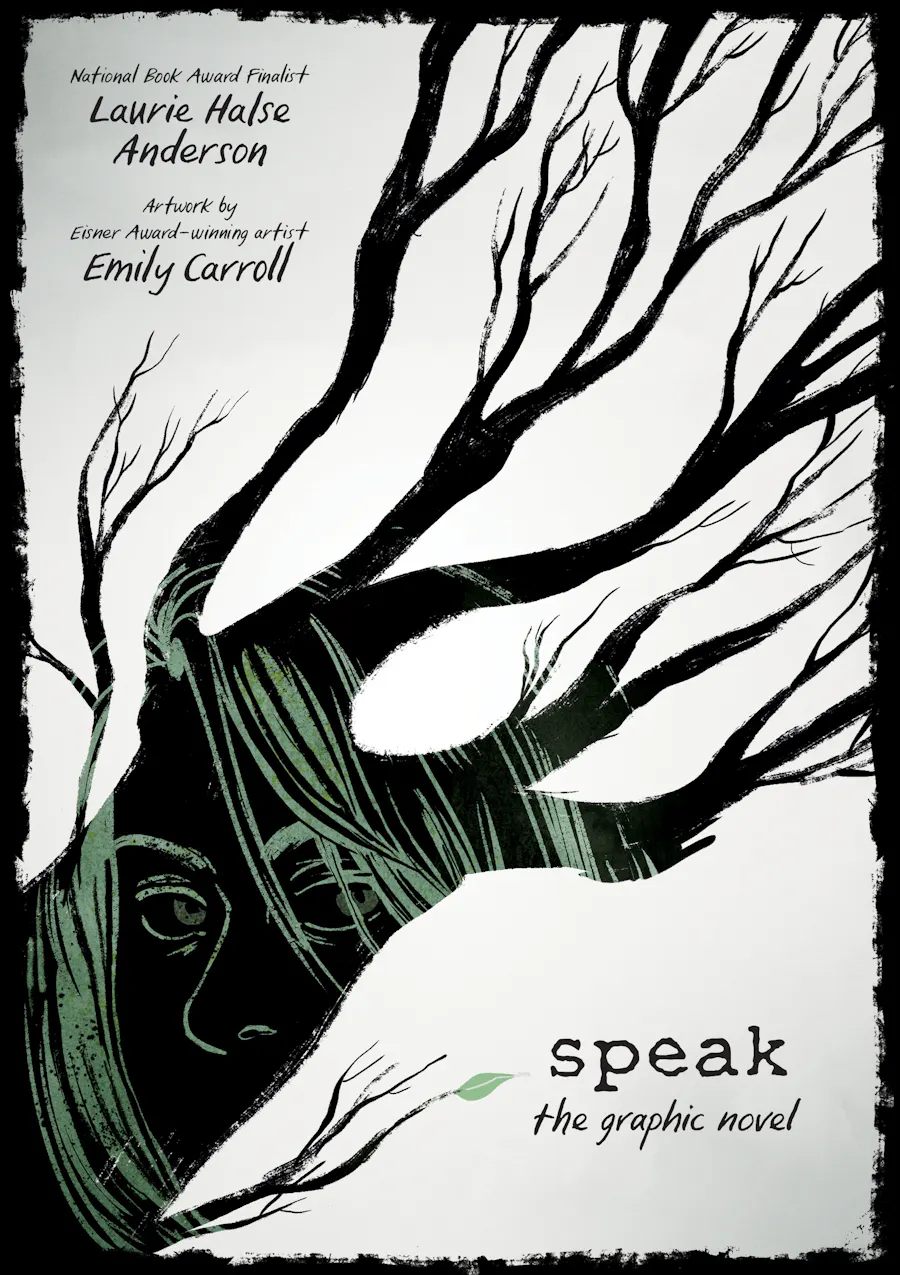


Cover art: Emily Carroll


An accomplished horror comics artist, Emily Carroll expertly utilizes light and shadow to distill Melinda’s struggles down to their essence, conveying the sensory experience of trauma and its aftermath. Nuanced visual details enhance Melinda’s incisive observations and compel the reader to linger on each page. 

Melinda initially asserts that “it is easier not to say anything,” then, inspired by Maya Angelou, the suffragists, her caring art teacher, and a few peer allies, she eventually gathers enough strength and trust to share her story and shed her old belief that “nobody really wants to hear what you have to say.”

This new iteration of a modern classic ensures its place both inside and outside of the classroom as an enduring tool of revolution, reminding us it is not a book for only women and girls. Updated with technological references and language for the 21st century, it is a rallying cry for each of us to use our voices in the brave conversations all our students and fellow humans deserve.

Tuesday, November 30, 2021

Bite-Sized Book Reviews: Part II

This book review was written as part of a series for the Oregon Council of Teachers of English in Spring 2021.


Circe (2018) by Madeline Miller


If it were up to Homer, most of us would only know the most recycled and frankly tired version of the goddess Circe: Odysseus arrives on her island, discovers her penchant for porcine curses, seduces her, then accepts her invitation to stay.


Madeline Miller’s Circe gives new voice to an ancient character, offering a complex and vivid portrayal of a woman denied her full glory in the classical canon. This novel of mythological realism is the latest rebuke to millenia of male authorship that relegates Circe to a secondary player whose main purpose is service to plundering men.


Cover design: Will Staehle


Daughter of Helios and naiad Perse, lesser nymph Circe is both an outsider in the world of gods and within her own family. She has little appetite for the gods’ economy of cruelty and “the great chain of fear” upon which their power depends. She is disgraced and then exiled for her early, pride-fueled experiments with herbs and magic; these transgressions are the catalyst for her transformation.


The “Mistress of Beasts” is paradoxical in multiple ways: she finds her first true freedom in her confinement to Aiaia and searches for her place within the tangled cosmogony of gods and mortals as “the dread goddess who speaks in human tongues.” A self-sufficient and sometimes lonely single mother who is both emboldened and haunted by the consequences of her gifts, she doles out divine justice to ship after ship of unwelcome sailors who regard women as “an endless feast laid out upon a table, beautiful and renewing. And so very bad at getting away.”


When the tension of her choices reaches a climax, Circe thinks, “I cannot bear this world a moment longer.” She gets her answer: “Then, child, make another.”


Thankfully, Madeline Miller does that for the story of Circe, and for us.


Monday, November 22, 2021

Bite-Sized Book Reviews: Part I

This book review was originally published by the Oregon Council of Teachers of English (OCTE) in Spring 2021.


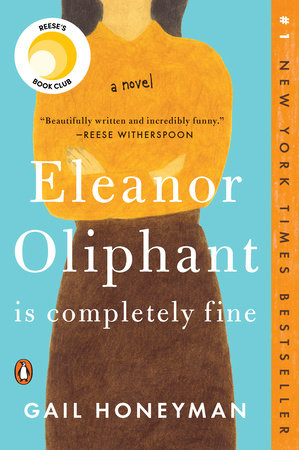
Eleanor Oliphant is Completely Fine (2017) by Gail Honeyman


In our study of the hero’s journey, I ask students to broaden their concept of the traditional grand epic with its limiting landscape of exclusively male heroes. Cast yourself as the unsung hero in your own journey, I tell them.


Do not wait for demigods to swoop in and save you; choose to save yourself, one quiet act of courage at a time. The interior journey of the heart and soul is just as transformative and often more harrowing than tales of beast-battling warriors.


Enter the title character and unassuming hero of Gail Honeyman’s debut novel Eleanor Oliphant is Completely Fine, who reminds us that sometimes the most heroic feat is to simply keep going. We meet the 29 year-old self-described “sole survivor” and “self-contained entity” in the midst of her very small and almost pathologically independent existence. 


Cover Art & Design: Jaya Miceli/Soleil420

Socially oblivious and hilariously deadpan Eleanor crafts a plan to change her life by pursuing a narcissistic musician, yet her real call to adventure comes in the form of the bumbling office IT guy enlisting her reluctant aid to a stranger who collapses on the street.


She is then nudged out of isolation by mentors and guides who eventually catalyze her to face the horrors of her past, speak the truth about them aloud, and learn to open her heart.


At one point, Eleanor asks, “How do I fix me?” to which the answer is, “You’re doing it already, Eleanor. You’re braver and stronger than you give yourself credit for. Keep going.”


Like Eleanor, we all long to “solve the puzzle of me.” In this story, the hero’s choice is not whether to sacrifice herself for others in the vein of the classic epic, but whether to sacrifice her carefully constructed world in order to save herself.